
Masai Mara vs Serengeti: Which Is Better for Safari?
Quick Answer: Masai Mara vs Serengeti
Both the Masai Mara (Kenya, 1,510 km²) and Serengeti National Park (Tanzania, 14,763 km²) share the same continuous 25,000 km² Great Migration ecosystem. Choose the Masai Mara for compact, high-density game viewing, iconic Mara River crossings (July–October), superior private conservancy flexibility (night drives, walking safaris, off-road tracking), and easier logistics from Nairobi. Choose the Serengeti for vast, endless horizons and year-round migration phases (calving season in southern Ndutu, Grumeti river crossings).
Masai Mara vs Serengeti: Side-by-Side Comparison
| Feature | Masai Mara (Kenya) | Serengeti (Tanzania) |
|---|---|---|
| Total Area & Size | 1,510 km² (+1,400 km² private conservancies) | 14,763 km² (Nearly 10x larger) |
| Great Migration Peak | July to October (Mara River crossings & lush savannas) | Year-round: Jan–Mar (Calving), May–Jul (Western), Aug–Nov (Northern) |
| Private Conservancy Rules | Off-road tracking, night drives, guided bush walks (Mara North, Naboisho, Olare Motorogi) | Strictly road-bound inside national park; limited private reserves (Grumeti/Mwiba) |
| Travel Logistics | 45-minute scheduled flight from Wilson Airport (WIL, Nairobi) | 1 to 2-hour flight from Arusha/Kilimanjaro or long overland circuit |
| Price Tier (pppn) | $750 – $3,200+ USD (All-inclusive luxury tented camps) | $850 – $3,800+ USD (Mobile migration & luxury lodges) |
Masai Mara vs Serengeti: The Direct Answer
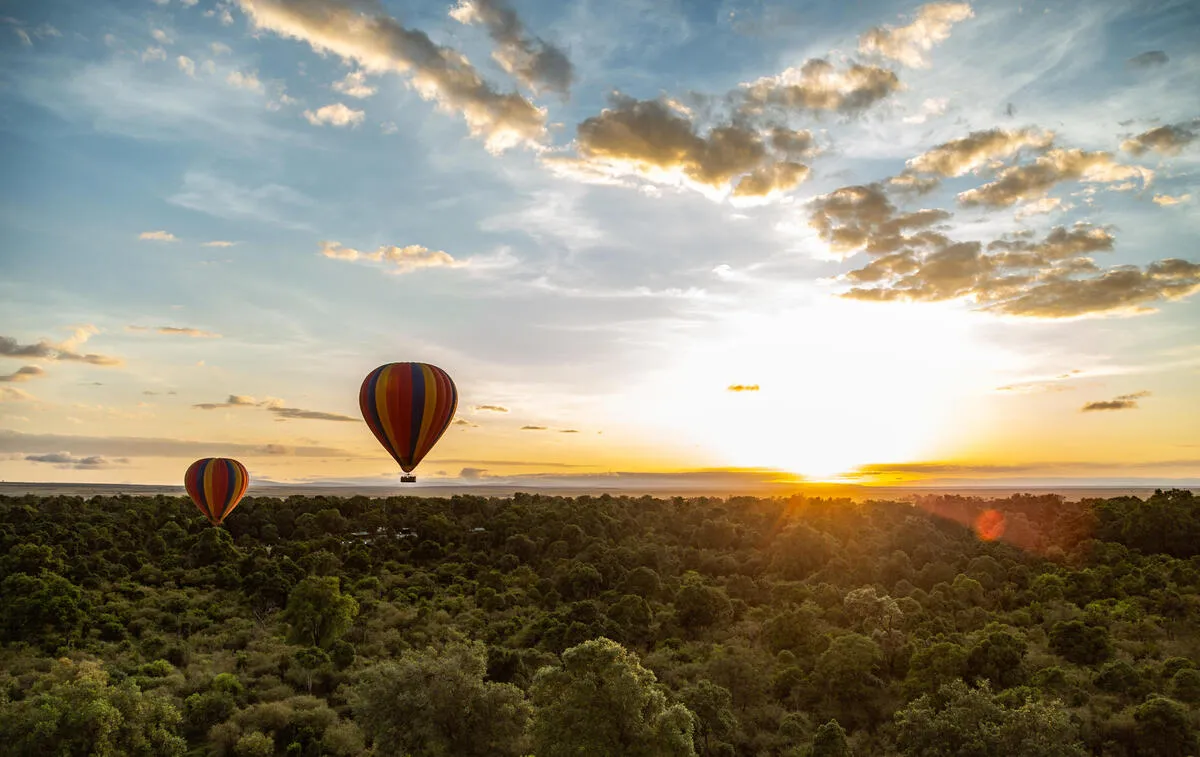
The Masai Mara and the Serengeti are the same ecosystem divided by an international border — the wildebeest migration moves continuously between them. For the Mara River crossings (July–October), the Masai Mara side offers slightly more reliable access to the most dramatic crossing points and a wider range of luxury camps in close proximity to the action. The Serengeti offers greater diversity across a much larger area (14,763 km² vs 1,510 km²), including the calving season in January–March that the Mara cannot match. Both deliver world-class lion and cheetah; choose based on travel dates and whether crossing drama or overall ecosystem scale matters more to you.
Key Differences at a Glance
| Factor | Masai Mara (Kenya) | Serengeti (Tanzania) |
|---|---|---|
| Size | 1,510 km² (reserve) + private conservancies | 14,763 km² national park |
| Country | Kenya | Tanzania |
| Mara River crossings | Excellent access — July–October | Northern Serengeti — July–October |
| Calving season | Not applicable (calving is in Serengeti) | January–March (southern Serengeti) |
| Year-round resident wildlife | Excellent — large resident lion, cheetah, elephant population | Large resident population across a vast area |
| Lion | Outstanding — Mara lion prides are famous | Highest lion density in Africa (~3,000) |
| Cheetah | Excellent — open plains | Excellent — open plains; slightly more dispersed |
| Leopard | Good — fig trees along Mara River | Good — less reliably seen than Sabi Sands |
| Wild dog | Rare — occasional packs only | Rare — occasional sightings in eastern Serengeti |
| Vehicle density | High at peak migration season | Lower overall — larger area distributes vehicles |
| Private conservancies | Yes — Olare Motorogi, Mara North, Naboisho etc. offer off-road access and exclusivity | Limited — Grumeti and Lamai areas only |
| Flight access | 30–45 min from Nairobi; 1 hr from Kilimanjaro | 1–2 hrs from Arusha or Kilimanjaro |
| Visa | Kenya eTA (online) | Tanzania visa on arrival or online |
| Price range | USD 400–3,000+ per person/night | USD 300–3,000+ per person/night |
The Migration: Is the Mara or Serengeti Better for River Crossings?
The Mara River crossings — arguably the most photographed wildlife event on Earth — occur on both sides of the Kenya-Tanzania border. The principal crossing points in the Masai Mara (Lookout Hill, Fig Tree Crossing, Ol Kiombo) are well-established and accessible from multiple Mara camps. The northern Serengeti (Kogatende area) offers the same crossings from the Tanzanian side, with fewer vehicles at peak times and the advantage of national park status.
For pure crossing proximity and flexibility, the Masai Mara’s private conservancies (Mara North, Olare Motorogi) have a slight edge — off-road driving is permitted, so vehicles can reposition quickly when crossings begin. In the national park section of the Mara, and throughout the Serengeti, vehicles must stay on designated tracks.
Verdict: For river crossings, the Masai Mara private conservancies are marginally superior for access and flexibility. The northern Serengeti offers comparable crossings with lower vehicle density.
Year-Round: Which Is Better Outside Migration Season?
Both the Masai Mara and Serengeti have large resident wildlife populations that deliver excellent game viewing year-round. The Mara’s permanent residents — including the famous Marsh Pride immortalised in BBC’s Big Cat Diary, and large cheetah populations on the open plains — make it compelling in every season. The Serengeti’s sheer size means different zones peak at different times: southern Serengeti for calving (January–March), Seronera for general game year-round, north for crossings (July–October).
Verdict: Outside migration season, the Masai Mara is more concentrated and easier to navigate; the Serengeti offers more variety but requires more planning to be in the right zone.
The Private Conservancy Advantage (Masai Mara)
The Masai Mara’s greatest structural advantage over the Serengeti is its network of private conservancies — community-owned land adjacent to the reserve where individual camps have exclusive traverse rights and off-road driving is permitted. The Olare Motorogi Conservancy, Mara North Conservancy, Naboisho Conservancy, and others offer the combination of Mara’s wildlife density with Botswana-style exclusivity. Night drives, off-road tracking, and walking safaris are all available in the conservancies — none of which are permitted in the national reserve itself.
The Serengeti has limited private concession equivalents — Singita Grumeti (western corridor) and the Lamai Wedge (northern Serengeti) offer some off-road flexibility, but the conservancy model is less developed.
How to Combine the Masai Mara and Serengeti
For guests with 8–10 days in East Africa, combining both is straightforward: fly between Nairobi and Arusha (1 hour) or drive across the border (3–4 hours via Namanga). A classic circuit: 3 nights Masai Mara + 3 nights Serengeti + 2 nights Ngorongoro Crater. African Safari Group designs these combined itineraries regularly for our East Africa clients.
Frequently Asked Questions
When is the best time to visit the Masai Mara?
July–October for the Mara River crossings. January–February for the short rains recovery and resident wildlife without migration crowds. December–February for the calving season — though this is in the southern Serengeti, not the Mara.
Is the Masai Mara or Serengeti safer?
Both are safe for tourists. The Masai Mara is in Kenya’s Rift Valley — a well-established tourism circuit with excellent infrastructure. The Serengeti is in northern Tanzania’s tourist-oriented zone. Standard travel precautions apply to both.
Do you need a visa for Kenya and Tanzania?
Kenya requires an eTA (electronic travel authorisation), available online before departure. Tanzania issues visas on arrival or via an online e-visa portal. Both are straightforward for US, UK, EU, and Australian passport holders.
Plan Your East Africa Safari
African Safari Group designs Masai Mara and Serengeti itineraries — as standalone experiences or combined circuits across Kenya and Tanzania. We work with the best lodges and conservancy camps across both ecosystems.
Enquire Now to plan your East Africa safari.