
Masai Mara National Reserve: The Complete Safari Guide
Masai Mara Summary (2026 Comprehensive Safari Guide):
The Masai Mara is Kenya’s flagship wildlife ecosystem, covering 1,510 km² of national reserve bordered by over 1,400 km² of private community conservancies in south-western Kenya. Renowned for hosting the Great Wildebeest Migration (July–October), Africa’s highest lion and cheetah density, sunrise hot air balloon safaris, and authentic luxury safari lodges, the Mara delivers the quintessential East African safari.
Top Masai Mara Lodges & Conservancies Ranked (2026)
| Lodge / Camp | Conservancy / Sector | Key Highlight | Rate Tier (pppn) |
|---|---|---|---|
| Angama Mara | Siria Escarpment (Mara Triangle) | Panoramic views 1,000 ft above the Mara; private airfield & Out of Africa kopje | $1,850 – $3,200 USD |
| Cottar’s 1920 Safari Camp | Olderkesi Private Conservancy | Centenary family safari heritage; 1920s vintage elegance, private boundary to Serengeti | $1,650 – $2,800 USD |
| Rekero Camp | Talek Riverfront (Main Reserve) | Front-row seat to prime Great Migration river crossings right from camp deck | $1,100 – $1,950 USD |
| Mara Plains Camp | Olare Motorogi Conservancy | Relais & Châteaux luxury; exclusive predator tracking & bespoke photography gear | $2,200 – $3,900+ USD |
The Masai Mara National Reserve is Kenya’s most celebrated wildlife destination and one of Africa’s great safari experiences. Covering 1,510 km² in Kenya’s southwestern Rift Valley, the Mara is the Kenyan extension of the Serengeti ecosystem — the same landscape, the same wildlife, and the same Great Migration that makes this corner of East Africa unique on Earth.
For travellers seeking the Great Migration river crossings, the Masai Mara is the destination. For those wanting to see Africa’s big cats — lion, leopard, and cheetah — in an open landscape where nothing hides, the Mara delivers with a consistency few other reserves can match. And for those who want to engage with Maasai culture in the context of one of Africa’s most iconic landscapes, there is nowhere better.
Masai Mara at a Glance
- Location: Narok County, Kenya — southwestern Kenya on the Tanzania border
- Size: 1,510 km² (reserve) + approximately 1,500 km² in adjacent community conservancies
- Big 5: Yes — all five resident
- Great Migration: July–October for Mara River crossings; the Migration circuit runs year-round across Tanzania and Kenya
- Big cats: Exceptional — lion, leopard, and cheetah all regularly encountered
- Access: Fly Nairobi → Masai Mara (45 minutes by light aircraft from Wilson Airport) or road from Nairobi (~5–6 hours)
- Malaria: Yes — Kenya is a malaria risk country
The Great Migration at the Masai Mara
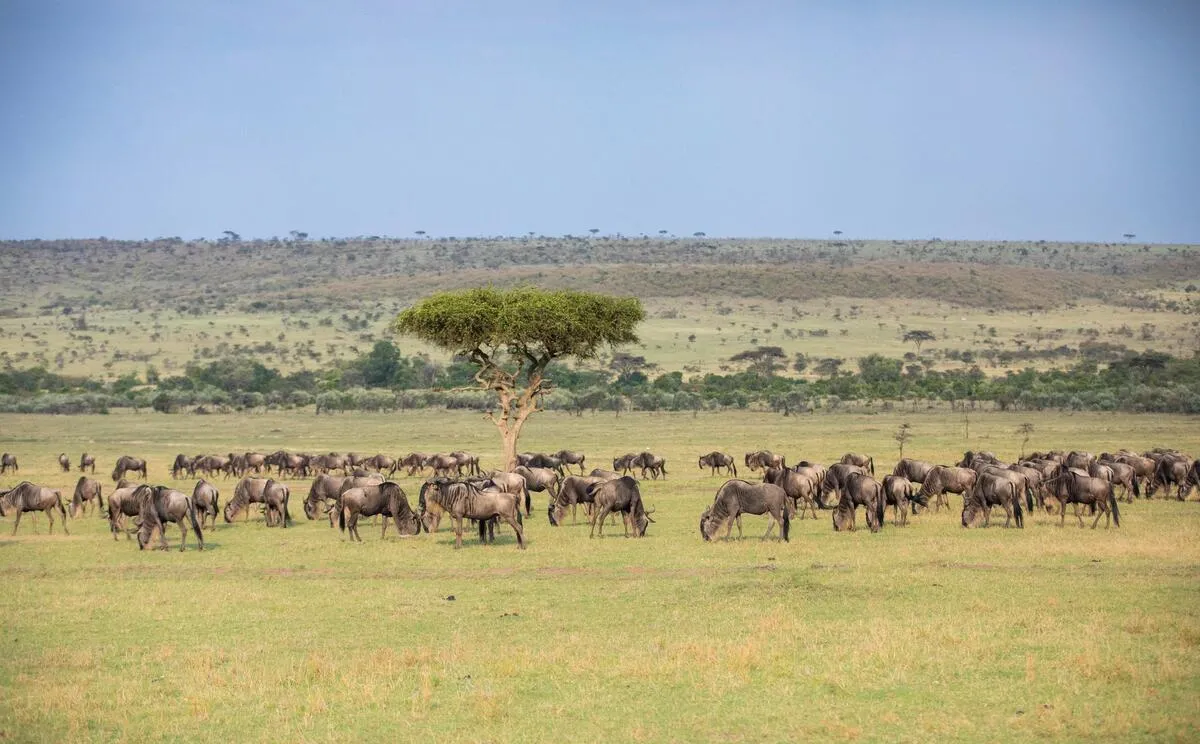
The Great Migration is the continuous movement of approximately 1.5 million wildebeest, 200,000 zebra, and 300,000 gazelle around the 1,800km Serengeti-Mara circuit. The herds follow rainfall and fresh grass in an annual clockwise loop between Tanzania and Kenya.
The Masai Mara hosts the most dramatic chapter of this story: the Mara River crossings.
When the Herds Arrive
Between July and October each year, the northern columns of the Migration reach the Mara River — the boundary between Tanzania’s Serengeti and Kenya’s Masai Mara. To reach the fresh grass on the north bank, the wildebeest must cross. The river in July–October runs with current, hosts massive Nile crocodile, and requires the herds to commit to a terrifying descent down steep muddy banks.
The crossings themselves are unpredictable. Herds mass at the bank — sometimes for hours, sometimes for days — before a lead animal commits and the rest follow in an explosive, uncontrolled rush of several thousand animals simultaneously. Crocodile intercept from concealed positions. Lions and hyenas wait on the banks. The chaos and scale of a Mara River crossing is unlike any other wildlife spectacle on Earth.
Peak crossing season: July–October, with August and September typically producing the highest frequency of crossings. Book camps 12+ months in advance for this period.
Crossing locations: The most reliable crossing points are on the northern Mara, in and around the Mara Triangle and the Kogatende/Lamai area of the northern Serengeti (Tanzania side). Mara River camps positioned near these crossing points are essential for maximising chances.
The Year-Round Migration
It is a misunderstanding to think the Great Migration is only a July–October event. The wildebeest are always somewhere in the ecosystem, and different phases of the circuit deliver different wildlife spectacles:
- January–March: Calving season in the southern Serengeti/Ndutu area — extraordinary predator action but in Tanzania, not Kenya
- June–July: Western corridor and early northern arrivals
- August–October: Mara River crossings — peak Kenya season
- November–December: Southward return through the central Mara
Wildlife of the Masai Mara
Lion
The Masai Mara’s lion prides are among the most studied in the world. Multiple well-documented prides — the Marsh Pride, the Ridge Pride, the Paradise Pride — hold territories across the reserve, and their long habituation history means encounters at extremely close range are standard. Documentary crews have filmed in the Mara for decades; the lions are completely indifferent to vehicles.
Sightings are extremely reliable. The open grass plains of the Mara provide the clearest lion viewing in Africa — no dense bush, no guesswork. A 3-night Mara stay will almost certainly include multiple lion encounters, often with cubs, feeding, or hunting.
Leopard
The riverine areas of the Mara — along the Mara River, the Talek River, and their tributaries — are excellent leopard habitat. Leopard are not as frequently sighted as lion but are a regular feature of the Mara game drive experience. Kills in trees along the river banks are a classic Mara sighting.
Cheetah
The Masai Mara is one of Africa’s finest cheetah destinations. The open short-grass plains of the eastern Mara and the Serengeti ecosystem provide perfect cheetah hunting habitat — wide sight lines, open ground, and prey species in abundance. Cheetah coalitions (groups of 2–3 males) are regularly encountered, and cheetah hunts observed in full daylight on the open plains are one of the Mara’s signature wildlife experiences.
Elephant
Large elephant herds move through the Mara ecosystem year-round, often crossing the reserve’s open plains in iconic, photographically extraordinary processions. The elephants are habituated to vehicles and can be closely observed.
Rhino
Black rhino are present in the Masai Mara but in small numbers, and sightings are uncommon. The rhino population is protected through anti-poaching programmes. For rhino as a specific priority, Ngorongoro Crater (Tanzania) or Lewa Wildlife Conservancy (Kenya) are stronger options.
Buffalo
Buffalo herds of hundreds of animals are common across the Mara. Their movements are often accompanied by lion, making for predictable and exciting wildlife viewing.
The Masai Mara Conservancies
Beyond the official 1,510 km² reserve, approximately 1,500 km² of adjacent community conservancies have transformed the Mara experience for premium travellers. The conservancies — Mara North, Olare Motorogi, Naboisho, Ol Kinyei, and others — are community-owned lands operated under partnership agreements with safari camps.
Key advantages of conservancy camps over main reserve camps:
- Exclusive access: The conservancies limit vehicle numbers — often dramatically. While the main reserve can have dozens of vehicles at a single lion sighting, conservancy areas often have just the camp’s own vehicles and occasionally one or two others.
- Night drives: Permitted in conservancies; not in the main reserve
- Off-road driving: Permitted in most conservancies
- Walking safaris: Available in most conservancies
For serious safari travellers, a conservancy camp is strongly preferred over a main reserve camp.
Best Camps in the Masai Mara
Sanctuary Olonana (Mara North Conservancy)
A well-established camp on the Mara River with strong wildlife access, excellent guiding, and all the benefits of conservancy positioning — night drives, off-road access, and exclusive sightings.
Angama Mara
Perched on the Oloololo Escarpment with one of the most dramatic views in Africa — the entire Mara spread below — Angama delivers world-class accommodation alongside the conservancy advantages. One of the Mara’s most celebrated properties.
Cottar’s 1920s Camp (Olderkesi Conservancy)
The oldest outfitter in East Africa, Cottar’s operates in its own exclusive private conservancy bordering the main reserve. Exceptional guiding, complete exclusivity.
Mahali Mzuri (Richard Branson’s camp, Mara North)
A boutique 12-tent camp in Mara North with some of the best sunrise views in the Mara and Virgin’s characteristic service delivery.
Governors’ Camp (main reserve)
One of the oldest and most iconic camps in the Mara, positioned on the Mara River inside the main reserve. Strong guiding heritage, excellent river frontage, and the prestige of a camp that has been operating since 1972.
Getting There
By air from Nairobi: The standard access route. Fly from Wilson Airport (Nairobi) to one of the Mara’s airstrips (Mara, Keekorok, Ol Kiombo, or private conservancy strips) — approximately 45 minutes. Multiple daily departures on Air Kenya, SafariLink, and Fly540.
From Nairobi Jomo Kenyatta International Airport: Taxi or transfer to Wilson Airport (30 minutes), then light aircraft to the Mara. Most camps arrange this transfer.
By road from Nairobi: 5–6 hours via the B3 through Narok. Manageable but a full day’s journey — not recommended for most guests when the flight takes 45 minutes.
Best Time to Visit Masai Mara
July–October: Peak season. The Great Migration Mara River crossings. High probability of witnessing dramatic crossing events. Book 12+ months in advance for conservancy camps during this period. This is also good lion, cheetah, and general wildlife season.
January–February: Excellent resident wildlife, excellent cheetah. Fewer visitors than peak. The Migration is in Tanzania (calving season) — still possible to experience migrating herds entering the Mara from the south in February.
June: Pre-peak. Good general wildlife, excellent cheetah. First wildebeest columns begin arriving from Tanzania. Lower rates than July–October.
Green season (April–May): Long rains. Fewer visitors, lower rates, lush landscape. Wildlife disperses somewhat but resident species are still abundant. Good for photography.
Maasai Culture
The Masai Mara takes its name from the Maasai people who have inhabited this landscape for centuries — semi-nomadic cattle herders whose culture, appearance, and relationship with wildlife is deeply intertwined with the Mara ecosystem.
Many camps and conservancies offer Maasai cultural visits — including village tours, traditional dance performances, and conversations with community members about the coexistence of traditional pastoralism and wildlife conservation. The conservancy model is a direct expression of Maasai community engagement with safari tourism.
Frequently Asked Questions — Masai Mara
When is the best time to see the Great Migration in the Masai Mara?
July–October for the famous Mara River crossings. August and September are typically peak. The crossings are never guaranteed on a specific day — they depend on herd movement and water levels — but this is the window. Book conservancy camps near the Mara River 12+ months in advance.
Is the Masai Mara or Serengeti better?
Both form the same Migration ecosystem. The Masai Mara offers the Kenya experience — conservancies with night drives and off-road access, Maasai cultural context, and slightly different camp character. The Serengeti offers more space, the complete Migration circuit (calving season in Tanzania), and different lodges. Most serious East Africa travellers visit both. For river crossings specifically: both border the Mara River and the experience is similar from either side.
Does the Masai Mara have the Big 5?
Yes — lion, leopard, elephant, rhino, and buffalo are all present. Lion and cheetah sightings are among the most reliable in Africa. Rhino sightings are uncommon (small population). For Big 5 emphasis including reliable rhino: combine Masai Mara with Lewa or Ol Pejeta (Kenya rhino conservancies).
What is a Masai Mara conservancy?
Community-owned land adjacent to the official national reserve, managed under partnership agreements with safari camps. Conservancies offer the same wildlife as the reserve (and are part of the same ecosystem) but with critical advantages: night drives, off-road driving, walking safaris, and dramatically lower vehicle numbers at sightings. Premium Mara safaris are almost always based in conservancies rather than the main reserve.
African Safari Group designs Kenya safaris including Masai Mara, Amboseli, and full northern circuit itineraries. Enquire here to plan your East Africa safari.
Plan Your Masai Mara Safari
African Safari Group specialises in Masai Mara itineraries. Tell us your travel dates, group size, and priorities — and we will build the perfect programme.